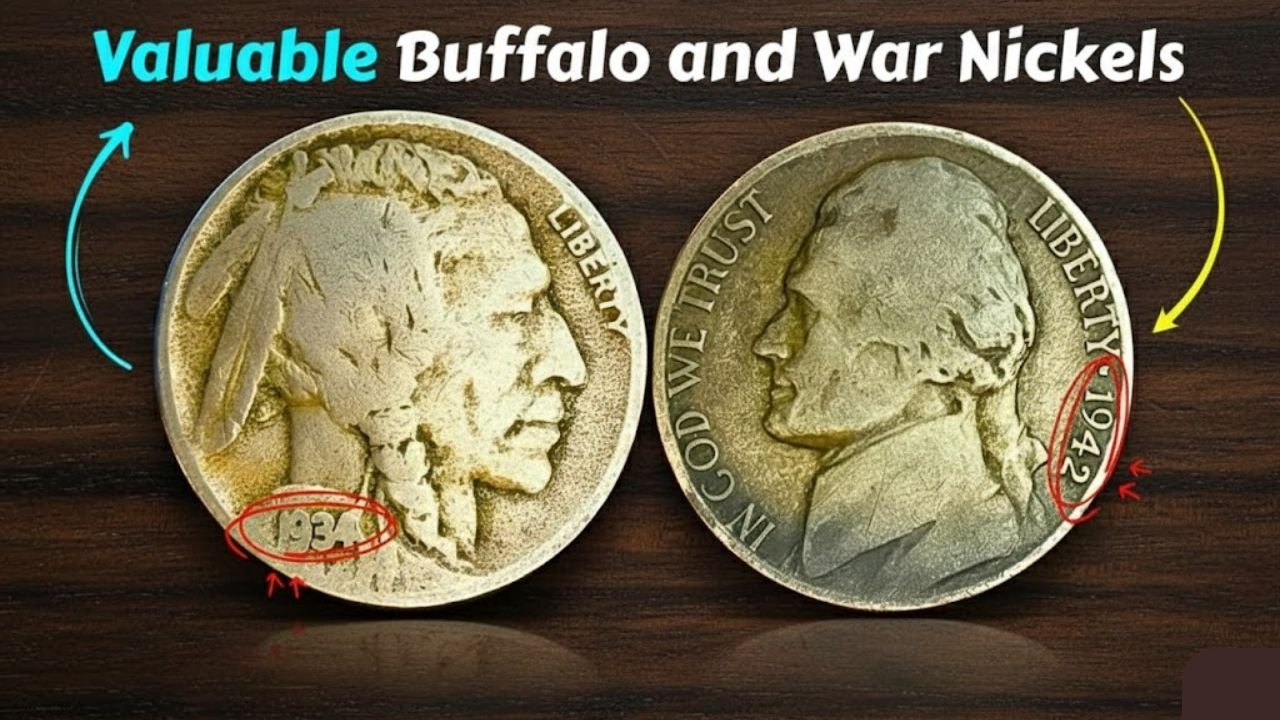
Most Valuable Buffalo and War Nickels : Among American coinage, few series capture the imagination of collectors and history enthusiasts quite like the Buffalo Nickel and the wartime Jefferson Nickel. These coins are not merely metal; they are miniature monuments to a bygone era, often holding surprising monetary value. It’s a fascinating thought that a coin from your grandfather’s jar or discovered in old circulation could be a coveted piece worth far more than five cents. This guide explores the key dates and varieties to look for, transforming a simple coin check into a journey through history.
The Enduring Legacy of the Buffalo Nickel
First minted in 1913 and continuing through 1938, the Buffalo Nickel (officially the Indian Head Nickel) is an icon of American design. Its obverse features a composite portrait of a Native American chief, while the reverse showcases an American bison. This detailed artistry, while beautiful, proved impractical for circulation, as the high points of the design—especially the date—wore down quickly. Consequently, finding these coins in sharp, well-defined condition is a challenge, and such specimens are highly prized by collectors today. Their value is rooted in their artistic significance, historical context, and condition.
Notable Varieties:
One of the most sought-after issues is the 1913 Type 1 Buffalo Nickel. This initial design placed the bison on a raised mound. It was quickly modified within the same year to a more durable “Type 2” design with a recessed ground line, making the original Type 1 a short-lived and valuable first edition.
Error coins also command great interest. The 1916 Doubled Die Obverse nickel shows noticeable doubling in the date and inscriptions, a result of a misalignment during the die-creation process. Even more famous is the 1937-D Three-Legged Buffalo Nickel. This occurred at the Denver Mint when overzealous polishing of a die accidentally removed the bison’s front leg. Coins struck from this damaged die entered circulation and have since become one of the most legendary error coins in U.S. history.
The Patriotic Metal of Wartime Nickels
From mid-1942 through 1945, the pressing needs of World War II led to a conservation effort that changed the composition of the nickel. Nickel metal was crucial for the war effort, leading the U.S. Mint to alter the alloy. These “War Nickels” are composed of 56% copper, 35% silver, and 9% manganese. They are easily identified by a large mint mark (P, D, or S) placed prominently above the depiction of Monticello on the reverse—the only time Jefferson Nickels have featured a mint mark on the reverse. This silver content gives them intrinsic value and a unique place in the series.
Key Dates and Errors:
While all War Nickels contain silver, certain dates and mintages are scarcer. The 1943-P nickel, for instance, has a lower mintage than its 1944 and 1945 counterparts, making it slightly more collectible in higher grades. Furthermore, collectors actively seek error varieties from this period, such as the 1944-D with doubled die characteristics or off-center strikes. These minting mistakes, frozen in time, add a significant premium to the coin’s base silver value.
Where Might These Coins Be Found?
The hunt is part of the excitement. While scarce, these nickels still surface in unexpected places. They are most commonly found in inherited coin collections, old piggy banks untouched for decades, or mixed in with bulk coin jars. Occasionally, they slip into modern circulation, often passed along unknowingly. Estate sales, flea markets, and local coin shops are also fertile ground for discovery. Success requires a blend of knowledge, patience, and a keen eye.
How to Assess Your Nickel
Proper evaluation hinges on three factors: Date, Mint Mark, and Condition. For Buffalo Nickels, a clear, unworn date is paramount. Use a magnifying glass to check for doubling or the distinctive details of the Three-Legged variety. For War Nickels, look for the large mint mark above Monticello. The coin’s state of preservation, from heavily worn to mint-state luster, dramatically affects its value. When in doubt, consulting a reputable coin dealer or utilizing a professional grading service can provide clarity and authentication.
Complete Reference Table: Buffalo & War Nickels
| Coin Type | Key Date/Variety | Mint Mark | Special Note | Estimated Value Range (Circ.-Unc.) |
|---|---|---|---|---|
| Buffalo Nickel | 1913 Type 1 | S (San Francisco) | First year, mound design. “S” mint is scarcer. | $50 – $5,000+ |
| Buffalo Nickel | 1916 Doubled Die | N/A | Visible doubling in date/lettering. Major error. | $1,500 – $25,000+ |
| Buffalo Nickel | 1937-D Three-Legged | D (Denver) | Famous die polish error removing bison’s leg. | $500 – $15,000+ |
| War Nickel | 1942-1945 (All) | P, D, S | 35% silver composition. Large rev. mint mark. | $1.50 (melt) – $50+ |
| War Nickel | 1943-P | P (Philadelphia) | Lower mintage key date of series. | $2 – $100+ |
| War Nickel | 1944-D Doubled Die | D (Denver) | Doubling on obverse design elements. Error coin. | $100 – $2,000+ |
Note: Values are highly approximate and can fluctuate with precious metal prices and the coin market. “Circ.” denotes Circulated grade; “Unc.” denotes Uncirculated grade. Exceptional specimens can exceed these ranges.
Final Thoughts
Buffalo and War Nickels are more than spare change; they are tangible fragments of American history, from the artistry of the early 20th century to the home-front sacrifice of a nation at war. The next time you sort through old coins, take a moment to examine each nickel closely. You are not just looking at metal—you are holding a story. With a bit of knowledge, you might uncover a hidden treasure that has been waiting silently in plain sight for decades. The pursuit connects us to the past and makes history personal, one five-cent piece at a time.
